Summary: Microneedling and fractional laser treatments work not by adding something to the skin, but by triggering repair. Understanding how that repair process works -- and what influences its quality -- changes how you think about getting the most from every session.
Reading time: 6 minutes
Skin aging is a repair problem, not a surface problem
Wrinkles, loss of firmness, and texture changes are often treated as surface issues. They are not. They reflect what is happening deeper in the dermis, where collagen, elastin, and structural support are maintained.
Over time, daily stressors accumulate -- UV exposure, oxidative stress, low-grade inflammation, glycation, hormonal shifts, and inadequate sleep and recovery. When repair keeps pace, skin maintains strength and elasticity. When repair falls behind, structure thins, fibers fragment, and recovery slows, even with excellent topical products.
This is the biological gap that microneedling and fractional lasers aim to address.
What these treatments actually do
Microneedling and fractional laser treatments use different tools but rely on the same principle: controlled injury to activate repair.
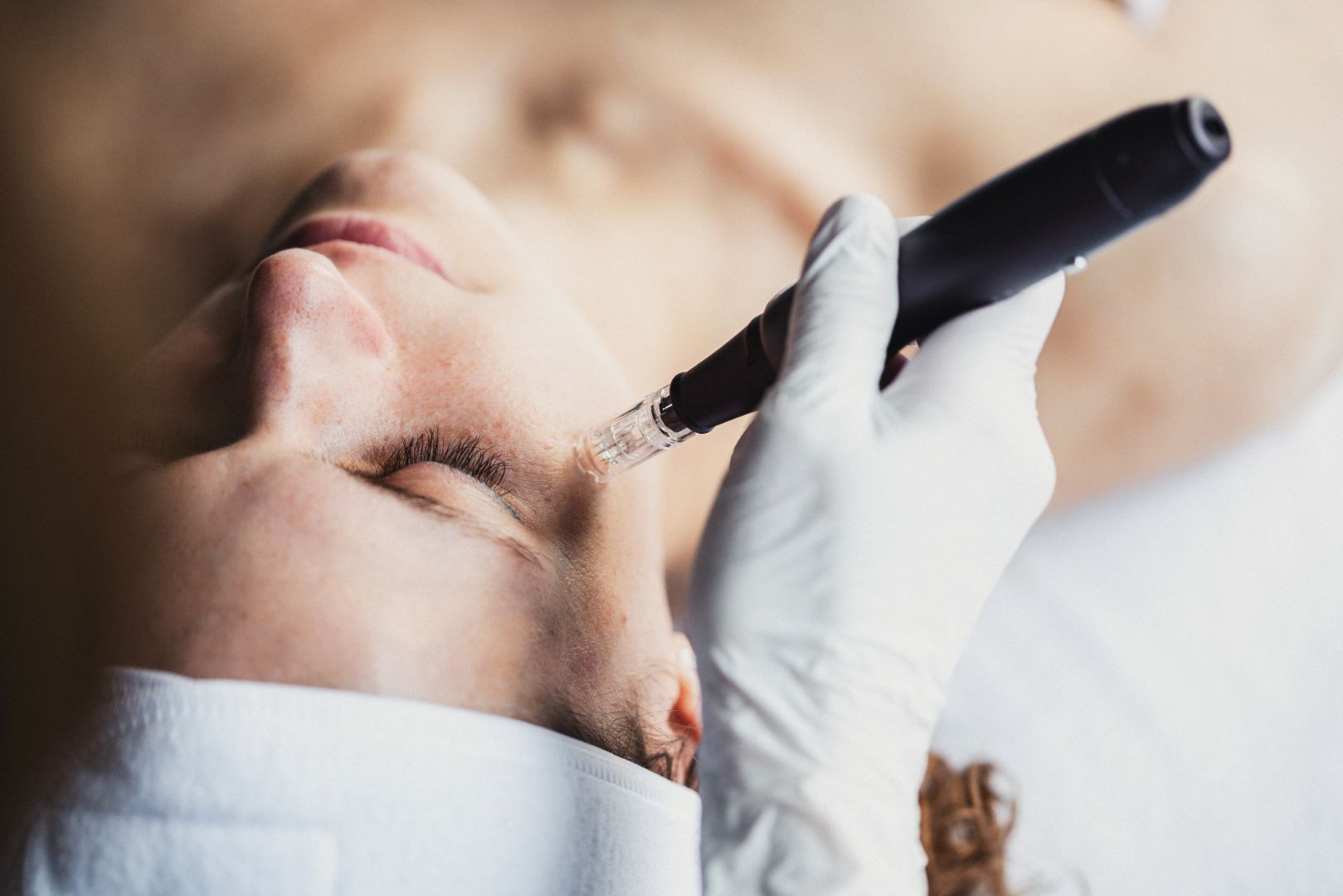
Microneedling creates precise micro-channels in the skin using fine needles. Fractional lasers deliver focused thermal energy to microscopic columns within the dermis, leaving surrounding tissue intact.
In both cases, the goal is not damage. It is signal.
These micro-injuries tell the skin that something needs to be rebuilt. What happens next depends on how prepared your biology is to respond.
The repair cascade
Once the skin detects controlled injury, a coordinated process begins:
Inflammatory signaling. Immune cells are recruited to clear debris and initiate repair. This phase is beneficial when brief and contained.
Fibroblast activation. The cells responsible for producing collagen and elastin increase activity. New structural proteins are laid down to reinforce the dermal scaffold.
Matrix remodeling. Old, fragmented collagen is broken down and replaced with better-organized fibers. Elasticity and tensile strength improve progressively over weeks to months.
Barrier restoration. Lipid synthesis and barrier components are replenished, improving hydration retention and resilience.
The visible result depends not just on the procedure, but on how efficiently your biology carries out each step.
Why results vary so widely between people
Two people can undergo the same treatment and see very different outcomes. The procedure initiates repair -- it does not guarantee it.
Results depend on baseline inflammation levels, oxidative stress burden, nutrient availability, sleep quality, barrier health, and the presence of senescent or stressed cells that interfere with clean repair signaling.
If the repair environment is depleted or noisy, collagen remodeling is slower and less organized. This is why some people experience prolonged redness, diminishing returns from repeated treatments, or inconsistent improvements in texture and firmness.
When more treatments are not the answer
If recovery feels slow or results plateau, the issue is often not the technique. It is the repair capacity underneath.
Signs the system is overloaded: prolonged inflammation after sessions, increased sensitivity or barrier disruption, longer recovery intervals needed, inconsistent improvements despite regular treatment.
At this point, intensifying the signal -- deeper needling, stronger lasers -- can increase stress without improving outcomes. Supporting the repair environment becomes more valuable than increasing the procedure.
What supports repair quality
Sleep and circadian rhythm. Night is the primary repair window. DNA repair, autophagy, collagen synthesis, and antioxidant defenses are all more active during sleep. Short or irregular nights blunt these pathways significantly.
Inflammation levels. Chronic low-grade inflammation competes with repair. Alcohol, smoking, ultra-processed food, and unmanaged stress all raise baseline inflammatory tone and slow recovery.
Nutrient availability. Fibroblasts need amino acids, lipids, antioxidants, and micronutrients to rebuild efficiently. Without adequate supply from within, the repair signal from a procedure has less to work with.
Cellular health. With age or repeated stress, some cells enter a senescent state -- alive, but no longer repairing or dividing normally. These cells secrete inflammatory signals that disrupt collagen organization and impair neighboring healthy cells. In areas with higher senescent burden, repair is slower and less complete.
Inside-out support between sessions
Procedures are signals. Repair biology determines results.
BOOST is designed for daily inside-out skin support, providing ceramides, hyaluronic acid, and the structural actives that help maintain the dermal environment between sessions. When the dermis is better supported, it is better prepared to respond to the repair signal that microneedling and lasers create.
RESET is formulated as a periodic, senolytic-style pulse to support healthier tissue signaling over time. By helping address the cellular noise that accumulates with age, it supports the conditions where clean repair is possible.
These are not replacements for procedures. They sit underneath them, supporting the same biological pathways microneedling and lasers rely on.
If you are investing in treatments that depend on repair biology, it makes sense to support that biology between sessions.
Explore the Skin Repair Duo: BOOST + RESET
Key takeaways
Microneedling and fractional lasers work by triggering repair, not by adding structure directly. Results depend on the quality of the repair environment underneath. Sleep, inflammation control, nutrient availability, and cellular health all shape outcomes. Inside-out support can meaningfully influence how effectively the skin responds between sessions.
Learn more: How nightly repair impacts your skin ·
Strengthen your skin barrier with ceramides and hyaluronic acid